THE BIGGEST LITTLE FARM a film by John Chester with special guest speaker TBA
Part of the SCIENCE ON SCREEN® Series An initiative of the Coolidge Corner Theatre in partnership with the Alfred P. Sloan Foundation
THE BIGGEST LITTLE FARM John Chester, 2018, 91 min, USA, Documentary
What does it take to bring a dying piece of land back to life? The Biggest Little Farm follows John and Molly Chester as they leave Los Angeles behind and set out to transform 200 acres of depleted, drought-stricken land into a thriving and radically diverse farm. But nature has its own plans. As coyotes, snails, pests, predators, drought, and unexpected animal friendships complicate their vision, the Chesters discover that every problem is part of a larger, interconnected system.
Filmed over eight years, John Chester’s extraordinary documentary is both an intimate story of ambition and perseverance and a vivid lesson in the astonishing complexity of the natural world. What begins as an idealistic dream of living in harmony with nature becomes a humbling exploration of biodiversity, resilience, and the delicate balance that sustains all living things.
Tickets: $7/adult (plus $5 Symphony Space Facility Fee added at checkout)
$5/seniors & students (plus $5 Symphony Space Facility Fee added at checkout)
This program is supported, in part, by public funds from the NYC Department of Youth and Community Development (DYCD) in partnership with the City Council and the office of NY City Council Majority Leader Shaun Abreu and Speaker Julie Menin
VMA architect Isabella Bartenstein (left) and Sennah Loftus, VMA Director of Interiors (at screen) review design and material options with Uptown’s Beth Krieger and Ira Deutchman.
By Renee Cho
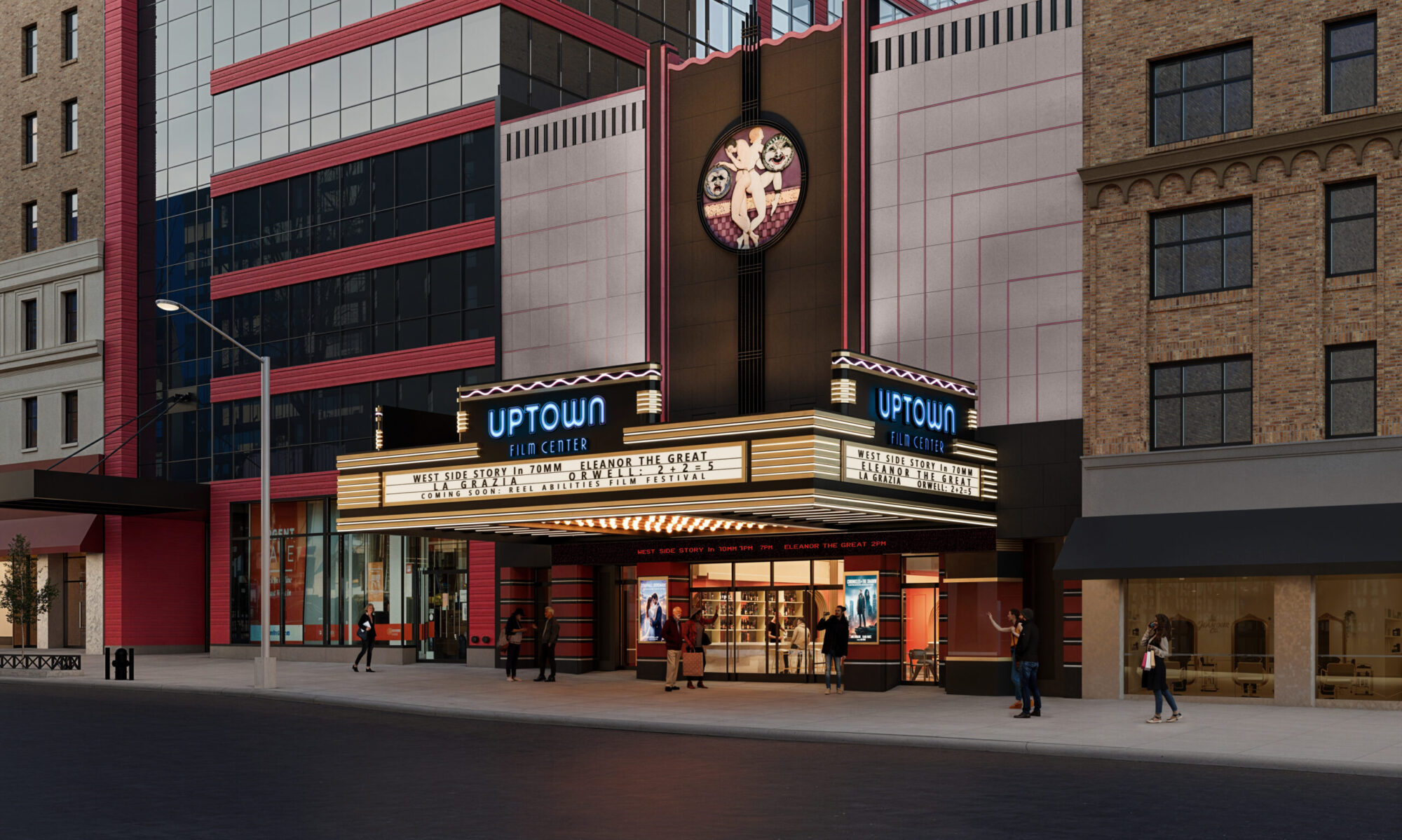
The Uptown team is deep into design development this summer; the original architectural renderings are now being refined–from measurements and material choices down to the wires and venting. For architects Voith & Mactavish (V&M), which has restored and renovated several historic movie theaters, it also means sustainable strategies are crystallizing.
“The concept of traditional design and sustainability have always gone hand in hand,” says John Cluver, lead architect on the project. “If you think about what traditional architecture is, it’s designing to the climate, designing to the environment that you’re in, use of natural strategies of ventilation and use of natural materials.”
John and colleague Elie Zeinoun are aiming for Silver LEED certification for the Uptown, which signifies a project that has gone significantly beyond basic green building requirements and standard local building codes, and is making a verifiable commitment to environmental stewardship.
For the Uptown, this entails reusing as much as possible of the existing building and structure. “This in itself is a huge sustainability boost, because you are avoiding new materials, and avoiding both the outsourcing and the transportation of the material,” explains Elie. “There’s a life cycle impact and carbon reduction that’s tied to that.” The roof structure, exterior walls and center floor will be reused, but all exterior surfaces will be insulated to modern levels of insulation for thermal efficiency.
New sustainable, Red List-free materials [the gold standard for material health and safety] will be used throughout. This means that all paints, carpets, wall coverings, insulation, adhesives, and other materials will be devoid of toxic materials, such as volatile organic components. Restrooms will be equipped with low-flow toilets and fixtures. Water fountains will have bottle fillers.
Acoustics in a multi-theater building are critical. The walls, ceilings and floor materials as well as wall coverings and upholstery affect how much sound is bouncing off and reverberating. “Acoustics are a huge part of the design, and there will be some spots where material will be both thermal and acoustic,” says John. “We are making sure that, where it’s appropriate, they can do double duty without compromising the performance of either.” And while laser projectors emit some heat, that heat can be captured and reused before it’s vented from the building.
The entire film center, including its systems and café equipment, will be electrified, which means no natural gas or fossil fuel will be used. Also, mechanical systems will be highly efficient to reduce energy costs and greenhouse gas emissions.
“Traditional construction is very durable, and that’s something we’re looking for as well,” notes John. “We want a building that is well built, is going to age well, and uses materials that are going to last a long time.”
While the timeline for construction is dependent on fundraising and permit approvals, the center hopes to begin the build-out next summer, with a targeted opening in winter 2028-2029.

 THE BIGGEST LITTLE FARM
 This program is supported, in part, by public funds from the NYC Department of Youth and Community Development (DYCD) in partnership with the City Council and the office of NY City Council Majority Leader Shaun Abreu and Speaker Julie Menin